When organizations start exploring SitecoreAI, most conversations focus on the technology.
- What capabilities should we implement first?
- How can we use AI to create content faster?
- What personalization opportunities should we prioritize?
- How quickly can we get value from our investment?
These are all important questions, but in my experience, they are rarely what determines whether a SitecoreAI program succeeds or struggles.
The biggest challenge is usually much less technical. It’s stakeholder alignment.
I’ve seen programs with strong teams, clear business cases, and solid technology foundations lose momentum because different stakeholder groups weren’t aligned on what success actually looked like. Marketing had one vision, IT had another, leadership had different expectations, and the project team was left trying to navigate competing priorities.
The challenge is that this misalignment often isn’t obvious at the beginning of a program. Everyone leaves the kickoff feeling aligned because they’re all excited about the possibilities of AI.
The disconnect typically shows up later, when decisions need to be made.
The Alignment Problem Starts Earlier Than Most Teams Realize
One of the most common patterns I see in SitecoreAI transformations is that everyone believes they’re working toward the same goal, but they’re actually measuring success differently.
Marketing may be focused on creating content more efficiently.
Digital teams may be focused on improving the customer experience.
IT may be focused on governance, security, and scalability.
Leadership may be focused on ROI and business outcomes.
None of these perspectives are wrong. The problem occurs when those priorities haven’t been discussed, aligned, and prioritized before the program starts moving forward.
When that happens, teams spend more time debating priorities than delivering value.
The Cost Is More Than Schedule Delays
When people think about stakeholder misalignment, they usually think about timeline impacts.
While delays certainly happen, the real cost is often much larger.
Misalignment tends to show up in ways such as:
- Conflicting priorities in the backlog
- Unclear ownership of AI initiatives
- Slow or stalled decision making
- Governance disagreements
- Shifting priorities between stakeholder groups
- Difficulty defining and measuring success
Over time, these challenges create friction across the program.
Instead of focusing on delivering outcomes, teams find themselves spending valuable time resolving internal disagreements and revisiting decisions that should have already been made.
The result is slower adoption, less confidence in the program, and reduced business value.
Alignment Doesn’t Mean Everyone Agrees
One misconception I encounter frequently is the belief that stakeholder alignment means everyone has to agree on every decision.
That’s not realistic, especially in large organizations.
Alignment isn’t about agreement.
It’s about clarity.
Teams don’t need identical priorities, but they do need a shared understanding of:
- Program objectives
- Success metrics
- Decision ownership
- Governance expectations
- Business priorities
- Implementation approach
When stakeholders understand how decisions are made and who owns them, programs can continue moving forward even when opinions differ.
Why PMs Play Such an Important Role
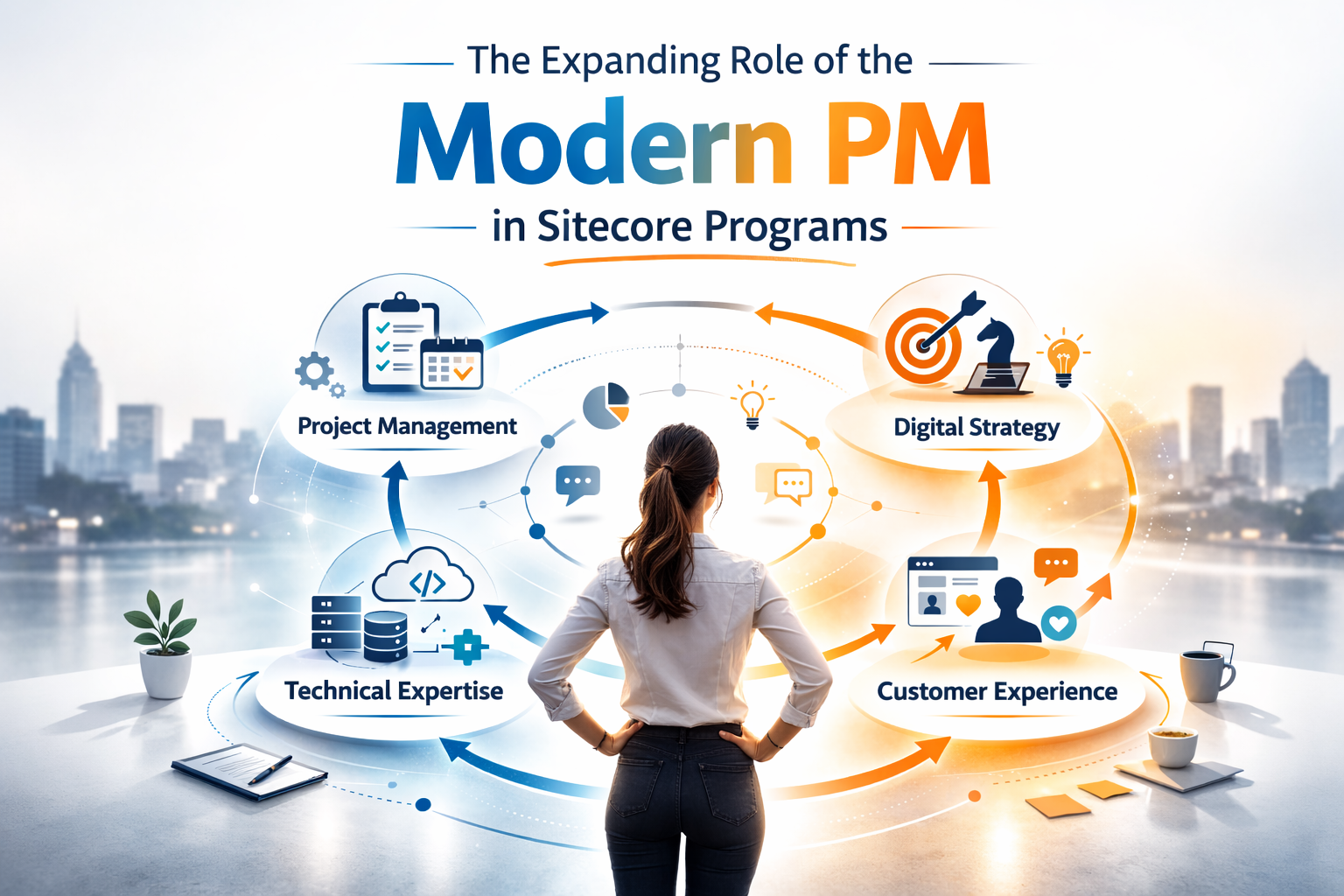
This is where project and program managers can have a significant impact.
The role is no longer just about schedules, status reports, and meeting facilitation. Successful PMs help identify misalignment before it becomes a problem.
- They connect business objectives to delivery priorities.
- They facilitate difficult conversations.
- They create visibility across stakeholder groups.
Most importantly, they help ensure that decisions are made and understood across the organization.
I’ve found that some of the most successful SitecoreAI programs aren’t necessarily the ones with the most advanced technology. They’re the ones where stakeholders remain aligned as the program evolves.
Building Alignment Into the Program
Alignment isn’t something you establish during kickoff and then check off the list. It requires ongoing attention throughout the life of the program.
As priorities shift, teams change, and AI capabilities mature, organizations need regular opportunities to revisit:
- Strategic goals
- Success metrics
- Roadmap priorities
- Stakeholder expectations
- Organizational readiness
The organizations that do this well tend to adapt faster and make decisions more confidently because everyone understands where the program is headed and why.
Final Thoughts
In most SitecoreAI transformations, technology isn’t the hardest part. People are.
The organizations that realize the most value from AI aren’t necessarily the ones that implement the most capabilities. They’re the ones that create alignment across leadership, marketing, digital, content, and technology teams.
When stakeholders are aligned, decisions happen faster, priorities become clearer, and teams can focus on delivering outcomes instead of resolving conflicts.
That’s why stakeholder alignment isn’t just a project management activity. It’s one of the most important success factors in any transformation program.